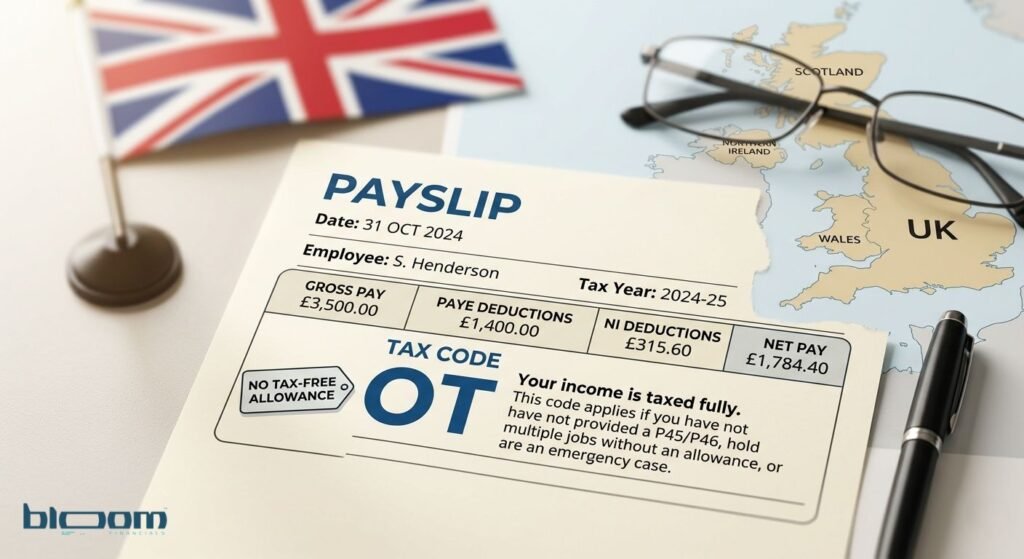
In the UK, understanding your tax code is crucial to ensuring that you’re paying the right amount of tax, neither overpaying nor underpaying. It can be easy to overlook tax codes, but your code has a significant impact on how much tax is deducted from your salary each month. If you’ve recently noticed an “OT” on your tax code, you may be feeling confused or concerned.
The truth is, encountering the “OT” code is relatively common, but it’s essential to address it quickly to avoid the risk of paying more tax than you need to. In this article, we’ll break down exactly what the OT tax code means, why it happens, and how you can resolve any issues to prevent it from affecting your finances. If you want to make sure you’re not overpaying, read on!
Table of Contents
ToggleWhat is the OT Tax Code?
At its core, the OT tax code is a temporary tax rate used by HMRC (Her Majesty’s Revenue and Customs) when they are unsure about your personal tax situation. Essentially, it means you are being taxed at an emergency rate, which could be significantly higher than what you would pay under the standard tax code.
Typically, the OT code indicates that HMRC hasn’t been able to determine your eligibility for the personal allowance—the portion of your income that is tax-free. As a result, you will pay tax on your entire income without any allowance for tax-free earnings.
But why does this happen? The OT tax code can be assigned in several scenarios, such as:
- Multiple Jobs or Sources of Income: If you have more than one job or source of income and HMRC isn’t aware of the full picture, they may assume you’re not entitled to a personal allowance.
- Unreported Income or Changes in Circumstances: If your earnings, benefits, or deductions haven’t been correctly reported, or if there’s a change in your personal circumstances, you may be automatically placed on the OT code.
- New Job or Delayed Information: If you’ve just started a new job, your employer may not have received full information about your previous employment, and until that’s rectified, you might be placed on the OT code.
Why HMRC Uses the OT Code: A Closer Look
HMRC assigns the OT code when they are uncertain about your tax situation. This is typically an emergency measure, so they don’t risk under-collecting taxes. Unfortunately, while this protects them, it can result in you overpaying your tax bill.
Without full information on your personal allowance, HMRC assumes you’re not eligible for it, meaning they will apply standard tax rates to your income without any deductions. Depending on your income level, this can lead to paying higher tax rates than you would under a normal tax code.
Let’s consider a real-life example:
Example: How the OT Code Affects Your Salary
Imagine you earn a basic salary of £30,000 per year. Normally, your personal allowance (which, for the 2023/24 tax year, is £12,570) would mean you only pay tax on the amount above that threshold.
However, if you are on the OT tax code, you won’t receive this allowance. Instead, your entire salary of £30,000 will be taxed at the applicable rate, which is 20% for basic-rate taxpayers. This means you could end up paying an extra £3,000 in tax compared to if you were assigned a tax code with your personal allowance.
The OT tax code often comes as a surprise, but understanding how it impacts your finances is crucial to ensuring that you’re not overpaying.
Why It’s Important to Fix an OT Tax Code
If you find yourself on the OT tax code, it’s essential to resolve the issue quickly. Not only does it mean you’re paying too much in tax, but it could also indicate an underlying issue with your tax records that needs addressing. It might be a simple clerical mistake, or there could be an issue with how your employer is reporting your income to HMRC.
Take Sarah, for example. She’s a teacher in Manchester, and when she started a second job in 2023, her employer didn’t report the income to HMRC properly. As a result, Sarah found herself placed on the OT tax code, and she ended up paying £600 more in taxes for that year. Once she contacted HMRC and clarified the situation, the tax code was adjusted, and she was refunded the excess tax.
Being on the OT tax code doesn’t necessarily mean something is wrong with your finances, but it’s a clear signal that your tax details need attention. The good news is, with the right steps, you can quickly rectify the situation and avoid paying unnecessary tax.
How to Fix an OT Tax Code: Steps to Take
If you believe you’ve been placed on the OT tax code by mistake or if your circumstances have changed, here’s what you can do:
- Check Your P60 or Payslip: Your tax code will appear on your P60 or payslip. If you see OT, double-check that all your income details are correct. This is especially important if you have more than one job or other sources of income.
- Contact HMRC Directly: If you believe your tax code is incorrect, reach out to HMRC. You can do this online or by calling their helpline. You may need to provide additional information, such as your earnings from other jobs or changes in your circumstances.
- Update Your Details: If you’ve recently moved to a new job, had a salary change, or started receiving additional income, make sure HMRC is up to date with your details. You can do this through your personal online tax account.
- Verify Your Tax Code with Your Employer: If HMRC provides a new tax code, ensure that your employer updates their payroll records. They should apply the correct tax code going forward to prevent further overpayments.
Potential Consequences of Remaining on the OT Code
Remaining on the OT tax code for too long can lead to several consequences:
- Overpaying Tax: As mentioned earlier, the most significant issue is overpaying. Over time, this can add up to substantial amounts.
- Inaccurate Tax Records: An incorrect tax code may lead to inaccurate tax records, which could affect things like your eligibility for loans or mortgages.
- Financial Stress: Not knowing whether you’re paying the right amount of tax can cause unnecessary stress, especially if you’re not sure how to resolve the issue.
Conclusion: Taking Action to Resolve Your OT Tax Code
Being placed on the OT tax code can seem like a frustrating situation, but it’s something that can be easily fixed with the right action. If you suspect you’ve been assigned the OT code or if you’re unsure of its implications, it’s always best to take the necessary steps to resolve it.
Start by reviewing your tax records, contacting HMRC, and making sure your employer has up-to-date information. Once everything is in order, you should be back on track with the correct tax code, and any overpayments can be refunded.
If you’re feeling uncertain or overwhelmed by the tax code system, don’t hesitate to reach out for help. A financial advisor or tax specialist can help you navigate the complexities of the UK tax system and ensure that you’re not overpaying.
Call to Action: Are you concerned about your tax code or unsure if you’re on the OT tax code? Get in touch with the team at Bloom Financials today! Our expert advisors can help you resolve any tax issues and ensure you’re paying the right amount. Let us help you keep your finances in check!