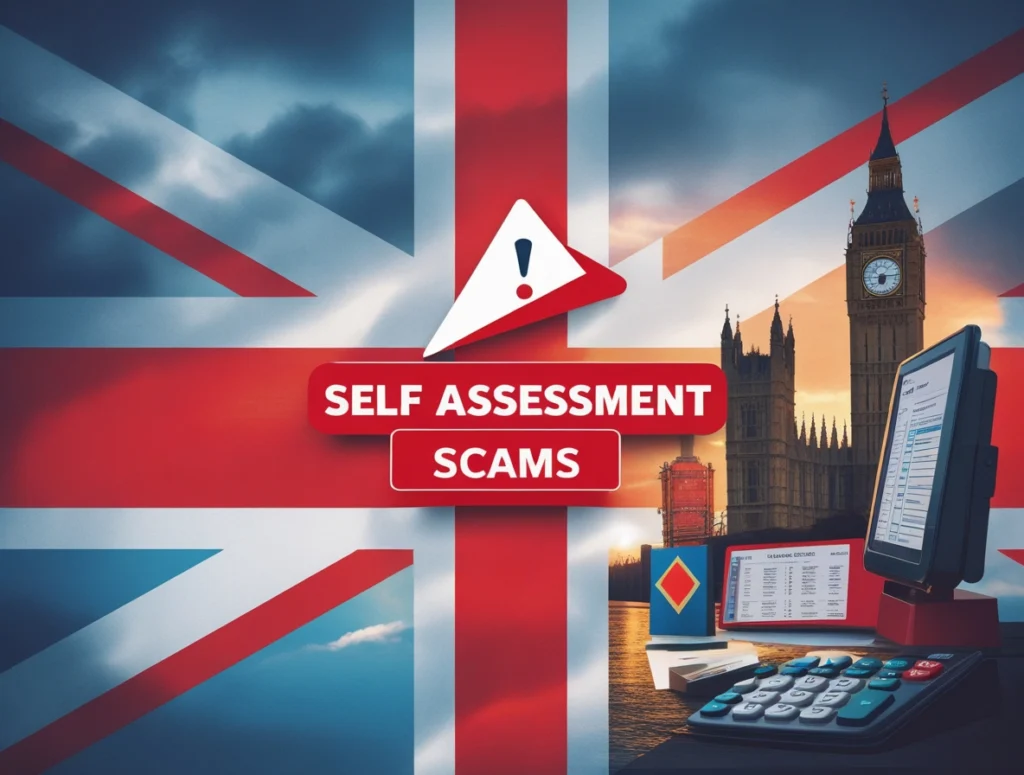
The rise in Self Assessment scams is nothing short of alarming. According to recent reports, HMRC (Her Majesty’s Revenue and Customs) has seen a sharp increase in fraudulent activity surrounding the Self Assessment process in the UK. In fact, over 10,000 reported scam incidents were linked to Self Assessment in just one year alone. While tax season should be a time for filing your returns and securing your financial future, for many UK taxpayers, it has instead become a period of heightened vulnerability to fraud. Scammers are capitalising on confusion, pressure, and the complexity of the Self Assessment system to steal from hardworking individuals and businesses. If you’re filing your Self Assessment, it’s crucial to know what to look out for to avoid falling victim to these scams.
Table of Contents
ToggleWhat Are Self Assessment Scams?
Self Assessment scams involve fraudsters posing as HMRC representatives in order to steal personal and financial information. These scams can take various forms, including emails, phone calls, or text messages that appear to be from HMRC, claiming you owe back taxes or that there’s an issue with your Self Assessment return.
In the worst cases, scammers may demand immediate payment or threaten legal action if you don’t comply. This type of scam can cause significant distress, particularly when it involves the manipulation of taxpayers’ fear of penalties or fines from HMRC.
Emma, a small business owner in Birmingham, fell victim to such a scam when she received a convincing email claiming that her Self Assessment was incomplete, along with a ‘link’ to complete it immediately. Unknowingly, she entered her banking details, which were then used to withdraw a significant amount from her account. This was a painful reminder of how easily fraudsters can deceive even the most diligent taxpayers.
HMRC Alerts and Rising Fraudulent Activity
In recent years, HMRC has been stepping up its efforts to alert the public about Self Assessment scams. According to HMRC’s 2025 Fraud Report, nearly £40 million was lost to tax scams in just one year. The number of reported incidents has more than doubled since 2021, with tax season becoming a particularly vulnerable period. Scammers often exploit the rush to meet the 31 January deadline, making taxpayers more susceptible to making quick decisions without due diligence.
Key Types of Self Assessment Scams to Watch Out For
- Phishing Emails: These emails appear legitimate and often contain official HMRC logos. They may threaten that your Self Assessment is overdue or that there’s a problem with your return and prompt you to click on a link to resolve it.
- Phone Scams: Fraudsters may call you, pretending to be from HMRC, and tell you that you owe money or face immediate legal action unless you pay promptly. These calls often sound urgent and alarming.
- SMS Scams: Fake HMRC text messages are becoming increasingly common, often claiming that there is a refund due to you or demanding urgent action to resolve an issue.
David, a self-employed graphic designer in London, received an SMS saying HMRC was processing a tax refund, only for the link to direct him to a fake HMRC website that stole his login details.
How to Spot a Self Assessment Scam
Scammers use sophisticated tactics, but there are telltale signs you can look for to protect yourself:
- Suspicious Email Addresses: HMRC emails always come from official addresses (e.g., noreply@hmrc.gov.uk). Be wary of emails from addresses that look unusual or don’t match the usual format.
- Urgency or Threats: HMRC will never threaten you with immediate action or claim that your taxes are overdue without proper notice. They also won’t demand payment in unusual methods (like gift cards or direct bank transfers).
- Unsolicited Communications: If you receive unexpected communication about your tax returns or payments, especially if you haven’t been contacted by HMRC recently, be cautious.
Protect Yourself from Self Assessment Scams
Here are some steps you can take to keep your personal information safe during Self Assessment season:
- Always Double-Check the Source: If you receive any unsolicited communication regarding your Self Assessment, always verify its authenticity. Contact HMRC directly through their official website or phone number.
- Don’t Click on Links or Attachments: If an email or text asks you to click on a link or download an attachment, avoid it. HMRC will never send links or attachments in their communications.
- Use Strong Passwords and Two-Factor Authentication: Secure your online HMRC account with a strong password and enable two-factor authentication (2FA) to add an extra layer of protection.
- Report Scams to HMRC: If you believe you’ve received a scam email, phone call, or text, report it to HMRC immediately. The earlier you report it, the sooner they can take action to prevent further fraud.
- Be Skeptical of ‘Too Good to Be True’ Offers: If you’re told you qualify for a tax refund that you don’t remember applying for, it’s likely a scam. Always verify claims of refunds with HMRC before taking any action.
What To Do if You’ve Been Scammed
If you suspect you’ve fallen victim to a Self Assessment scam, it’s crucial to act quickly. Here’s what you should do:
- Contact HMRC Immediately: HMRC can help you report the scam and protect your account. They may also advise you on next steps to secure your information.
- Alert Your Bank: If your financial details were compromised, notify your bank right away. They can help you prevent any further transactions from being made.
- Change Your Passwords: If you provided any login details or account information to a scammer, change your passwords on all relevant accounts immediately.
Conclusion: Stay Vigilant and Protect Your Finances
The threat of Self Assessment scams is on the rise, and the consequences can be devastating. By staying informed about the types of scams in circulation and taking steps to protect yourself, you can significantly reduce your risk. Remember that HMRC will never contact you in a threatening or unsolicited manner, so always be cautious when responding to unexpected communications.
If you suspect you’ve been targeted, act fast and report the incident to HMRC. Share your experience with friends and colleagues to help protect others from falling into the same traps.
Stay vigilant, safeguard your personal details, and ensure that your Self Assessment process is safe and secure.