Understanding the different types of taxation is crucial for both individuals and businesses alike. In the UK, businesses must navigate a complex tax system that includes both direct and indirect taxes. But what exactly are these taxes, and how do they impact businesses, especially when it comes to the ever-important corporation tax? In this article, we’ll explore the difference between direct and indirect taxation, with a specific focus on whether corporation tax qualifies as a direct tax. If you’re a business owner or someone interested in UK tax regulations, read on to gain valuable insights into these tax systems and learn how Bloom Financials can support your tax planning needs.
Table of Contents
ToggleWhat is Direct vs. Indirect Taxation?
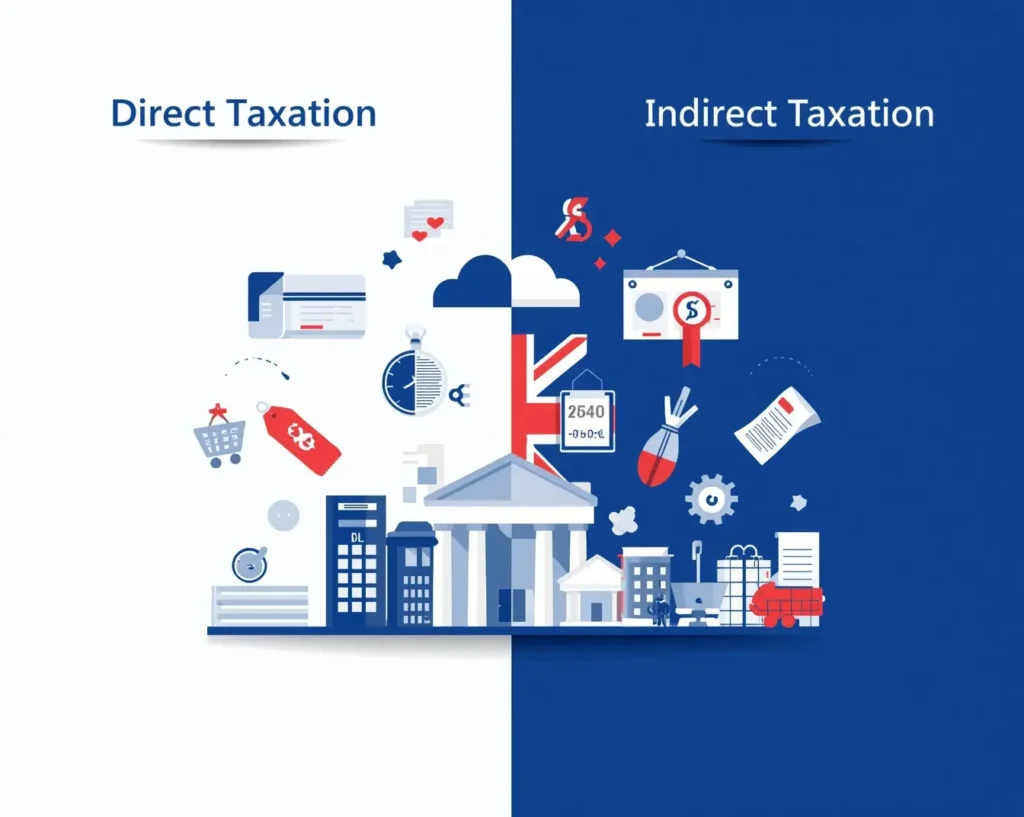
Taxation can be broadly classified into two categories: direct taxes and indirect taxes. These two types of taxation differ in their application and the parties responsible for paying them. Understanding the distinction between direct and indirect taxes is vital for comprehending how businesses are taxed, including the classification of corporation tax.
Definition of Direct Taxation
Direct taxation refers to taxes that are levied directly on an individual or business entity. These taxes are typically based on income, wealth, or profits. The taxpayer is responsible for paying the tax directly to the government, and the amount of tax is usually tied to the individual’s or company’s ability to pay. Direct taxes are progressive in nature, meaning the higher your income or profits, the higher your tax liability.
Examples of direct taxes include:
- Income Tax: Levied on the income earned by individuals.
- Corporation Tax: Paid by companies on their profits.
- Capital Gains Tax: Tax on the profit made from the sale of assets like property or stocks.
- Inheritance Tax: Levied on estates after someone passes away.
Definition of Indirect Taxation
Indirect taxation, on the other hand, is a tax that is levied on goods and services rather than on income or profits. The key difference here is that the burden of indirect taxes is passed on to consumers, who ultimately bear the cost of the tax. While businesses are responsible for collecting and remitting indirect taxes to the government, the consumer indirectly pays the tax through higher prices for goods and services.
Examples of indirect taxes include:
- Value Added Tax (VAT): A consumption tax added to goods and services.
- Excise Duty: Tax applied to specific goods such as alcohol, tobacco, and fuel.
- Customs Duties: Taxes on imports and exports.
- Stamp Duty: Tax on legal documents, typically in property transactions.
Key Differences Between Direct and Indirect Taxation
To better understand the distinction between these two forms of taxation, it’s helpful to break them down into key characteristics. Below is a quick comparison of the main differences:
| Characteristic | Direct Taxation | Indirect Taxation |
| Who pays the tax? | The individual or business directly pays the tax. | The consumer pays the tax through higher prices. |
| Tax Base | Based on income, profits, or wealth. | Based on the consumption of goods and services. |
| Examples | Income tax, corporation tax, capital gains tax. | VAT, excise duties, customs duties. |
| Who collects the tax? | Paid directly to the government by the taxpayer. | Collected by businesses and passed on to the government. |
| Progressivity | Progressive – the higher the income or profits, the higher the tax rate. | Regressive – affects all consumers equally, regardless of income. |
Is Corporation Tax a Direct Tax?
Now, let’s address the question that many business owners and finance professionals ask: Is corporation tax a direct tax?
Corporation tax is a direct tax, as it is levied directly on the profits of a business. Companies are required to pay this tax based on their taxable profits, and the responsibility to pay lies with the business itself, not the consumer. The rate at which corporation tax is charged can vary depending on the size and structure of the business, with small businesses sometimes benefiting from lower rates.
In the UK, corporation tax applies to both UK-based companies and foreign companies operating in the country. The rate of corporation tax has seen significant changes over the years, and the current rate is set at 25% for businesses with profits over £250,000 (as of April 2023). For businesses with profits below £50,000, a lower rate of 19% is applied, with a gradual increase for those falling between £50,000 and £250,000.
Corporation tax is also unique in that it is a self-assessment tax. This means businesses must calculate their own profits, determine how much tax they owe, and ensure that the payment is made to HMRC. Failure to do so can result in penalties and interest charges, making it essential for businesses to stay on top of their tax obligations.
Implications of Direct vs. Indirect Taxation on Businesses in the UK
For businesses in the UK, both direct and indirect taxes have significant implications for operations, cash flow, and profitability. Let’s examine how these two forms of taxation can affect businesses:
Direct Taxation:
- Corporation Tax: As discussed, corporation tax is one of the most important direct taxes for businesses. Companies must ensure they keep accurate records of their profits to avoid overpaying or underpaying their taxes.
- Income Tax for Employees: Businesses also need to account for income tax on their employees’ salaries. Employers are responsible for withholding and remitting income tax to HMRC on behalf of their staff.
- Capital Gains Tax: When selling business assets, companies may incur capital gains tax on any profits made. This can have an impact on decision-making related to asset disposal.
Indirect Taxation:
- VAT: Most businesses in the UK are required to register for VAT if their taxable turnover exceeds £85,000. Businesses charge VAT on their sales and can reclaim VAT on purchases, which can impact cash flow. Failure to correctly handle VAT can lead to significant financial penalties.
- Excise Duties: Businesses in specific sectors, such as alcohol or tobacco, are responsible for collecting and paying excise duties. This can add additional layers of complexity to pricing and profitability.
- Customs Duties: For businesses involved in international trade, customs duties can affect the cost of importing and exporting goods. These taxes may fluctuate depending on the trade agreements in place.
How Bloom Financials Can Help You with Taxation
Navigating the complexities of both direct and indirect taxation can be challenging, especially with frequent changes in tax rates and regulations. Bloom Financials is here to provide expert advice and tailored solutions to help businesses manage their tax obligations efficiently.
Our services include:
- Tax Advisory: Helping businesses understand and manage direct and indirect taxes.
- Tax Planning: Creating strategies to optimise tax liabilities, including corporation tax planning.
- Compliance Services: Ensuring your business complies with all relevant tax laws, including VAT, corporation tax, and more.
- Tax Returns: Assisting with the preparation and submission of accurate tax returns to HMRC.
With Bloom Financials on your side, you can rest assured that your business is staying compliant with UK tax laws while maximising potential tax savings.
Conclusion
Understanding the distinction between direct and indirect taxation is essential for business owners and financial professionals in the UK. Direct taxes, such as corporation tax, are levied directly on a business’s profits, while indirect taxes, such as VAT, are passed on to consumers through the cost of goods and services. Corporation tax is a direct tax, and businesses must ensure they are compliant with HMRC regulations to avoid penalties.
At Bloom Financials, we specialise in helping businesses navigate the complexities of the UK tax system. Whether you need assistance with corporation tax, VAT, or any other aspect of taxation, our team of experts is here to guide you every step of the way.
Get in touch with Bloom Financials today for expert advice and support with your tax planning needs!