
You check your payslip and notice that your tax deduction has increased. Your salary hasn’t changed, but the amount reaching your bank account has. Perhaps HMRC has changed your tax code. Perhaps an old employer is still showing on your record. Or perhaps you’re paying tax on a company benefit you no longer receive.
For landlords, sole traders and company directors, the questions can be even more complicated. New digital reporting requirements, Self Assessment deadlines and Corporation Tax obligations mean there’s more to keep track of than a single annual tax bill.
Understanding Tax HMRC requirements starts with knowing which tax applies to you, how HMRC calculates it and what to do when the figures appear wrong.
This guide explains UK Income Tax, personal allowances, PAYE tax codes, refunds, HMRC contact numbers, Corporation Tax and the Making Tax Digital changes affecting taxpayers in 2026 and beyond.
More importantly, it shows you how to check your position before a small misunderstanding becomes an expensive problem.
Tax HMRC: What UK taxpayers need to know
HM Revenue & Customs (HMRC) is the government department responsible for administering and collecting most UK taxes.
If you work, run a business, receive rental income or manage a limited company, HMRC may hold information about your earnings, tax payments and reporting obligations.
However, not everyone pays tax in the same way.
An employee usually has Income Tax deducted through PAYE. A sole trader may need to calculate trading profits and submit Self Assessment returns. A limited company generally pays Corporation Tax on its taxable profits, while its directors may separately pay Income Tax on salaries and dividends.
These distinctions matter because correcting a PAYE tax code is not the same as amending a Self Assessment return or fixing a company’s Corporation Tax record.
Which HMRC tax applies to you?
| Tax or system | Who it generally affects | Main purpose |
| PAYE Income Tax | Employees and pension recipients | Collects Income Tax through payroll or pension payments |
| Self Assessment | Sole traders, landlords and others required to file | Reports income, gains, reliefs and tax liabilities |
| Corporation Tax | Limited companies and certain organisations | Taxes qualifying company profits |
| National Insurance | Employees, employers and some self-employed people | Collects contributions under applicable rules |
| VAT | VAT-registered businesses | Accounts for VAT on taxable supplies and relevant purchases |
| Making Tax Digital for Income Tax | Qualifying sole traders and landlords | Requires digital records, quarterly updates and annual tax returns |
The first useful question isn’t simply, “How much tax do I owe?” It’s “Which system should be calculating and collecting it?”
Once you know that, it becomes easier to find the correct HMRC service, records and contact route.
How HMRC manages personal tax in the UK
Personal Income Tax applies to various kinds of income, including employment earnings, pensions, taxable savings, rental profits and self-employment profits.
Different rules can apply depending on the income source.
For employees, the PAYE system normally collects tax throughout the year. Employers use HMRC tax codes and payroll information to calculate deductions.
For self-employed individuals, taxable trading profits are generally calculated after deducting allowable business expenses, subject to the applicable accounting and tax rules.
Landlords usually calculate taxable property profits after allowable deductions and adjustments. Special restrictions can apply, including those affecting finance costs for individual residential landlords.
HMRC uses information from employers, pension providers, taxpayers and other sources to determine liabilities and identify potential differences.
However, information can be incomplete or outdated.
A change of employment, additional pension, taxable benefit or second income source may affect the calculation. That’s why checking your personal tax record is worthwhile even when your employer handles payroll correctly.
For taxpayers who need help reviewing Income Tax, reliefs or filing requirements, Bloom Financials provides personal tax services.
HMRC Personal Allowance and Income Tax rates for 2026/27
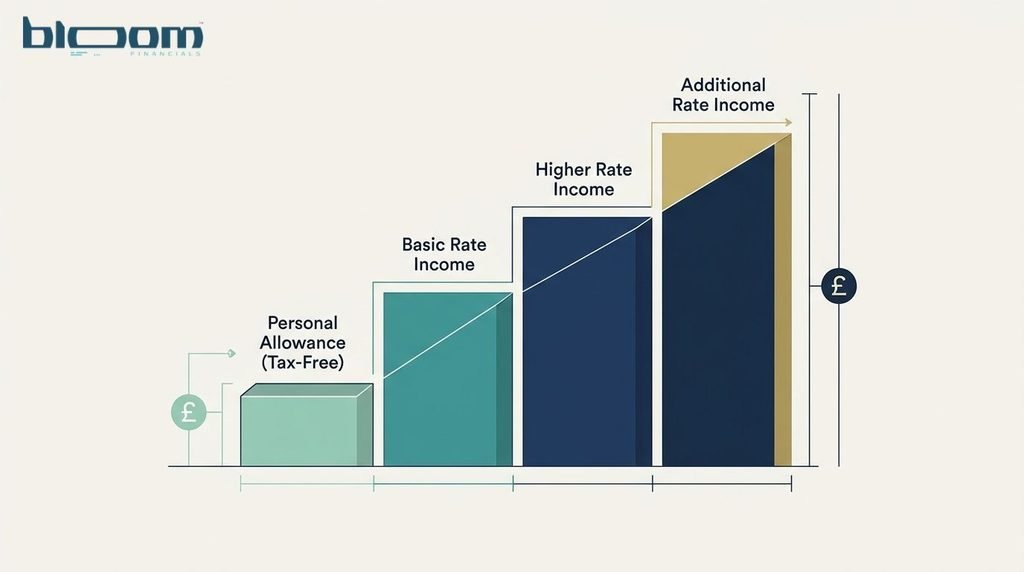
The standard HMRC Personal Allowance is £12,570 for the 2026/27 tax year, running from 6 April 2026 to 5 April 2027.
This is the amount of income most eligible individuals can receive before paying Income Tax.
It isn’t a payment from HMRC. It’s a tax-free allowance used when calculating liability.
The amount can change according to personal circumstances, certain claims and income levels.
Income Tax bands in England, Wales and Northern Ireland
The following table shows the main 2026/27 rates for employment and other relevant non-savings, non-dividend income, assuming the standard Personal Allowance.
| Annual income band | Income Tax rate |
| Up to £12,570 | 0% |
| £12,571 to £50,270 | 20% |
| £50,271 to £125,140 | 40% |
| Above £125,140 | 45% |
These are marginal rates. Moving into a higher band doesn’t mean your entire income suddenly becomes taxable at that higher rate.
The table also needs an important qualification: the Personal Allowance reduces when adjusted net income exceeds £100,000, so an individual’s actual liability can be more complicated than the headline bands suggest.
You can verify the applicable rates on the official GOV.UK Income Tax rates and allowances page.
Worked example 1: Income Tax on a £36,000 salary
Consider a hypothetical employee in England who earns £36,000 annually and has the standard Personal Allowance.
Assume there are no other taxable income sources, tax-code adjustments or relevant reliefs.
| Calculation | Amount |
| Annual employment income | £36,000 |
| Less Personal Allowance | £12,570 |
| Income subject to Income Tax | £23,430 |
| Income Tax at 20% | £4,686 |
The employee’s estimated annual Income Tax is £4,686.
That works out to an average of £390.50 per month, although actual PAYE deductions may vary during the year.
National Insurance, pension contributions and student loan deductions are separate and have not been included.
This example illustrates why it’s useful to understand the calculation rather than judge whether a payslip is correct from the total deductions alone.
What happens to the Personal Allowance above £100,000?
The standard Personal Allowance is reduced by £1 for every £2 of adjusted net income above £100,000.
For example, if adjusted net income is £110,000, the allowance is reduced by £5,000:
£12,570 − £5,000 = £7,570 remaining Personal Allowance.
At adjusted net income of £125,140 or more, the standard allowance is reduced to zero.
Adjusted net income is not necessarily the same as gross salary. Certain pension contributions and other adjustments can affect it.
For higher earners, examining adjusted net income may be particularly important when planning pension contributions or reviewing tax calculations.
Is Income Tax different in Scotland?
Yes. Scotland uses different bands and rates for non-savings, non-dividend Income Tax.
For 2026/27, the Scottish rates are 19%, 20%, 21%, 42%, 45% and 48%, depending on the relevant band.
The UK-wide Personal Allowance generally remains £12,570, subject to the same income-related reduction.
Scottish taxpayers should use the correct Scottish bands rather than applying the England, Wales and Northern Ireland table to their employment income.
Savings interest and dividend income follow separate UK-wide tax arrangements.
How to check your HMRC tax code
Your tax code tells your employer or pension provider how much Income Tax to deduct through PAYE.
An incorrect code can result in too much or too little tax being collected.
The most familiar tax code is 1257L, normally associated with the standard £12,570 Personal Allowance.
But this doesn’t mean every employee should automatically have 1257L. Different arrangements apply where HMRC needs to account for other jobs, pensions, benefits, earlier unpaid tax or adjustments.
What do common tax codes mean?
| Tax code | General meaning |
| 1257L | Standard Personal Allowance commonly applied |
| BR | All income from that source taxed at the basic rate |
| 0T | No Personal Allowance allocated to that income source |
| K | Additional taxable amounts exceed the available allowance |
| S1257L | Scottish taxpayer with the relevant allowance |
| C1257L | Welsh taxpayer with the relevant allowance |
| 1257L M1 or W1 | Emergency non-cumulative PAYE calculation |
An emergency code does not automatically mean HMRC has made a mistake.
It may be used when a new employer doesn’t yet have all the information needed to calculate PAYE cumulatively.
However, it deserves attention if your employment circumstances suggest the code should already have been updated.
Five steps to review your PAYE code
- Find your current code. Look at your latest payslip or HMRC coding notice.
- Check your online record. Sign in to your personal tax account and review the employment and pension information.
- Compare income estimates. Check that expected earnings and taxable benefits are reasonably accurate.
- Identify discrepancies. Look for duplicate employment records, incorrect benefits or unexpected adjustments.
- Report corrections. Use HMRC’s online service or contact the Income Tax team where necessary.
You can access these details through your HMRC personal tax account.
If you’re having problems signing in, Bloom Financials also explains Government Gateway IDs and the transition to GOV.UK One Login.
Worked example 2: How an allowance error affects tax
Imagine an employee earning £36,000 whose PAYE calculation incorrectly gives them £1,000 less tax-free allowance than they should receive.
Assuming all the affected income falls within the 20% tax band:
£1,000 × 20% = £200 additional Income Tax over a full year.
If the incorrect code applies for only part of the year, the actual effect will depend on the payroll calculation and when the correction occurs.
This example isn’t proof that a particular code is wrong. It shows how even a relatively small allowance adjustment can change take-home pay.
When HMRC corrects a cumulative tax code, payroll may adjust the tax deducted during the remaining year. Other cases may require an end-of-year reconciliation.
HMRC tax refunds: Why you might be owed money
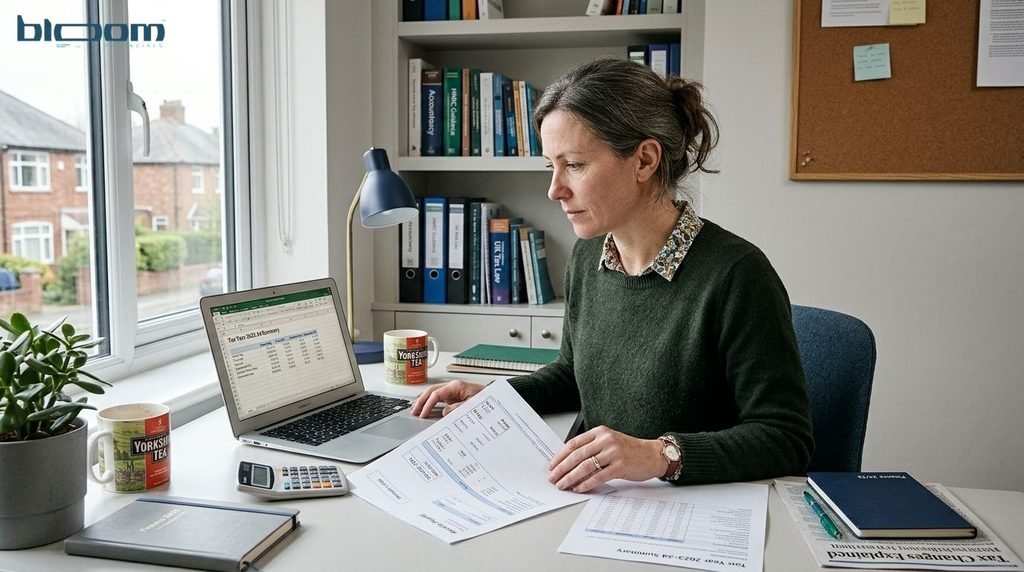
An HMRC tax refund may arise when the amount of tax already collected is greater than the tax legally due.
This can happen for several reasons.
You might have changed jobs, stopped working part-way through a tax year, been placed on an emergency tax code or continued paying tax on a benefit you no longer receive.
Some taxpayers may also be entitled to relief for eligible employment expenses or pension contributions that have not been reflected correctly.
However, not every unusual deduction creates a refund entitlement.
The correct calculation must consider all relevant taxable income, allowances, reliefs and tax already paid.
Why HMRC sends a P800 calculation
A P800 is an HMRC tax calculation that may be issued after the end of the tax year when records indicate an Income Tax overpayment or underpayment.
It can include earnings, pensions, tax deducted and adjustments used to calculate the final position.
The letter tells you whether HMRC believes you have paid too much or too little tax and explains what happens next.
Before accepting its conclusion, compare the information against your P60, P45, payslips and pension records where relevant.
For a detailed explanation, read Bloom Financials’ guide to P800 tax calculations and how HMRC calculates them.
Worked example 3: Calculating a possible tax refund
Suppose a hypothetical employee in England has the following final figures for a tax year:
| Description | Amount |
| Correct annual Income Tax liability | £4,686 |
| PAYE Income Tax already deducted | £5,126 |
| Difference | £440 |
The calculation is:
£5,126 − £4,686 = £440 potential overpayment.
If the underlying income and allowance figures are correct and there are no other adjustments, the employee may be entitled to a £440 refund.
The £440 isn’t guaranteed simply because the employee’s payslips add up to that amount. HMRC must establish the final liability using the complete relevant information.
How do you claim an HMRC tax refund?
The method depends on the reason for the overpayment and whether HMRC has issued a P800.
If your P800 offers online claiming, you can use the official service, normally with the reference number from the letter and your National Insurance number.
In some circumstances, HMRC automatically sends a cheque instead.
Check the actual instructions in your letter and use the official GOV.UK P800 tax refund guidance.
If your repayment arises through Self Assessment, the process is different. You should check your Self Assessment account, repayment position and any relevant adjustments.
Did millions of people overpay UK tax?
Reports about millions overpaid uk tax refer to a genuine concern, but the reporting period matters.
In February 2026, the Financial Times reported, citing information obtained through a Freedom of Information request, that more than 5.5 million taxpayers had overpaid Income Tax during 2023/24, with combined overpayments of approximately £3.47 billion.
Those figures concern the 2023/24 tax year. They should not be described as newly measured 2026/27 overpayments.
The practical lesson is that PAYE deductions should not be assumed correct merely because they were processed automatically.
How to carry out an HMRC tax check
For most PAYE employees, checking your Income Tax position doesn’t require an accountant or a phone call as the first step.
HMRC’s online services allow you to review the tax information currently held against your record.
Start by comparing your latest payslip with your online account.
Review your tax code, estimated annual earnings, employment history, taxable benefits and pension information.
If an employer is still showing as active after you’ve left, or HMRC’s income estimate is substantially different from your actual position, investigate whether an update is needed.
You should also examine any P60, P45, P11D or HMRC calculation letter relevant to the discrepancy.
An important distinction is that your tax code isn’t itself a final tax calculation. It is an instruction used in the PAYE deduction process.
Your annual liability may change when HMRC receives final income information.
People searching for an “hmrc tax check” should therefore distinguish between three tasks: checking their current-year PAYE position, reviewing a previous tax year and confirming whether a refund or additional payment is due.
HMRC contact numbers for tax codes and Corporation Tax
HMRC has different contact routes for different taxes.
Calling the wrong department may lead to unnecessary transfers or delays.
Where possible, use the relevant online service first. If you need to speak to an adviser, the following numbers were checked against official GOV.UK contact pages on 10 November 2026.
HMRC contact details
| Type of enquiry | UK telephone number | Typical enquiries |
| Income Tax and PAYE | 0300 200 3300 | Tax codes, PAYE discrepancies, P800 calculations |
| Corporation Tax | 0300 200 3410 | Company Corporation Tax payments, records and general enquiries |
Both published contact pages list Monday to Friday, 8am to 6pm, excluding bank holidays, as their telephone opening hours.
Always confirm details before calling, particularly if you’re using this guide long after its publication.
Official contacts:
What should you prepare before contacting HMRC?
For personal tax enquiries, have your National Insurance number, relevant payslips, tax code and any HMRC letters ready.
For Corporation Tax, HMRC generally expects the company’s 10-digit Unique Taxpayer Reference (UTR) and information about the relevant accounting period.
Explain the precise issue rather than simply saying your tax looks wrong.
For instance, saying that an old employer remains on your record and appears to be affecting your PAYE calculation gives the adviser a clearer starting point.
A security reminder: Refund scams frequently imitate HMRC. Avoid using unfamiliar links in unsolicited messages and never disclose passwords or security codes to an unexpected caller.
If you’re searching for numbers for HMRC, use the official department contact pages rather than relying on phone numbers circulated through social media or unverified directories.
Corporation Tax: What limited companies need to know

Corporation Tax is separate from a director’s personal Income Tax.
A UK limited company generally pays Corporation Tax on its taxable profits, subject to relevant reliefs, adjustments and any special rules.
Taxable profits are not necessarily the same as turnover, cash in the bank or the profit shown in management accounts.
Business expenditure, capital allowances, disallowable costs, losses and other accounting-to-tax adjustments can all affect the final amount.
Corporation Tax rates in 2026
For the financial year beginning 1 April 2026, the standard rates for companies outside the special ring-fence regimes are:
| Relevant profits | Corporation Tax treatment |
| £50,000 or less | 19% small profits rate, where applicable |
| Between £50,000 and £250,000 | Marginal relief may apply |
| £250,000 or more | 25% main rate, where applicable |
These limits can be reduced for short accounting periods and associated companies. The calculation can also depend on augmented profits.
The correct rate should therefore be checked against the company’s actual circumstances.
See HMRC’s Corporation Tax rates and allowances.
Worked example 4: Corporation Tax on £100,000 of profit
Assume a hypothetical UK limited company has taxable profits of £100,000 for a full 12-month accounting period falling wholly within the relevant 2026 Corporation Tax financial year.
Assume there are no associated companies, no exceptional adjustments, and augmented profits equal taxable profits.
The illustrative calculation is:
- Tax at 25%: £100,000 × 25% = £25,000
- Marginal relief: (£250,000 − £100,000) × 3/200 = £2,250
- Corporation Tax after marginal relief: £22,750
This illustrates why applying a flat 19% or 25% rate to every company’s profits may produce the wrong answer.
Corporation Tax payment and filing deadlines
A common mistake is assuming that payment and filing have the same deadline.
For most companies, Corporation Tax is payable nine months and one day after the accounting period ends, while the Company Tax Return is due 12 months after the accounting period ends.
For example, a company with a Corporation Tax accounting period ending on 31 December 2026 would normally:
- Pay Corporation Tax by 1 October 2027.
- File its Company Tax Return by 31 December 2027.
Special payment arrangements apply to certain larger companies.
A Company Tax Return normally includes form CT600, supporting computations and the appropriate accounts. A company that has received a notice to file may still need to submit a return even if no Corporation Tax is payable.
Directors who need to arrange their company’s HMRC online access can read Bloom Financials’ guide to requesting a Corporation Tax activation code.
Accurate bookkeeping also helps companies identify tax adjustments and prepare returns efficiently. Bloom Financials explains its broader accounting services.
Self Assessment: Which deadlines should taxpayers remember?
Self Assessment is used to report income and other relevant tax information when HMRC requires a taxpayer to submit a return.
This may include self-employed individuals, landlords and taxpayers with certain income sources, gains or tax charges that aren’t fully dealt with through PAYE.
Not everyone with a small amount of additional income is automatically required to submit a return. Eligibility depends on the circumstances and applicable rules.
For the 2025/26 tax year, which ended on 5 April 2026:
| Obligation | Deadline |
| Register or notify HMRC where required | Normally 5 October 2026 |
| Paper Self Assessment return | 31 October 2026 |
| Online Self Assessment return | 31 January 2027 |
| Pay outstanding balancing tax | 31 January 2027 |
| Second payment on account, where required | 31 July 2027 |
If a registration or filing deadline has already passed, taxpayers should address the position promptly rather than assume the obligation disappears.
Someone registering late may receive a different filing deadline from HMRC, but that doesn’t automatically extend the normal tax payment deadline.
Keep supporting records, review allowable expenses and reliefs, and submit accurate figures.
For taxpayers entering Making Tax Digital for the first time in 2026/27, there is another important distinction: the 2025/26 return is still submitted under the previous arrangements, while the 2026/27 annual return is due by 31 January 2028 using the relevant MTD process.
Making Tax Digital deadlines for landlords and sole traders
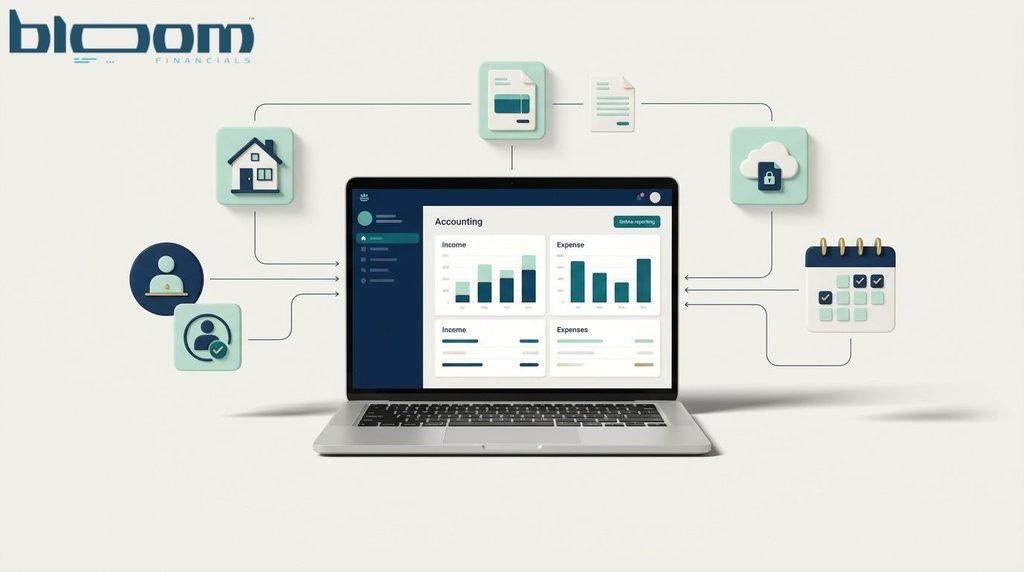
Making Tax Digital (MTD) for Income Tax is changing the way qualifying sole traders and landlords maintain records and report information to HMRC.
For eligible taxpayers, it requires compatible software, digital income and expense records, quarterly updates and an annual tax return.
It is not simply a new name for the existing annual Self Assessment process.
Nor is it the same as Making Tax Digital for VAT.
Who needs to use Making Tax Digital?
The staged thresholds are based on qualifying income from self-employment and property.
| MTD start date | Qualifying income threshold | Tax year used for assessment |
| 6 April 2026 | More than £50,000 | 2024/25 |
| 6 April 2027 | More than £30,000 | 2025/26 |
| 6 April 2028 | More than £20,000 | 2026/27 |
The thresholds are strict: income exactly equal to the specified threshold does not exceed it.
These rules primarily affect eligible individuals registered for Self Assessment who have qualifying self-employment or property income.
Partnerships do not currently have a confirmed mandatory entry timetable under the same staged individual requirements.
Certain taxpayers may qualify for automatic or application-based exemptions, including eligible people who are digitally excluded.
The official starting point is HMRC’s Making Tax Digital eligibility guidance.
What counts as qualifying income?
This is one of the most misunderstood parts of the system.
MTD qualifying income generally means gross income from self-employment and property before deducting expenses.
It isn’t simply taxable profit.
It can include multiple qualifying sources added together.
Employment income collected through PAYE, dividends and pension income do not normally count towards this particular threshold.
For jointly owned property, the individual’s relevant share is generally used.
Worked example 5: A landlord with freelance income
Consider a hypothetical taxpayer whose 2024/25 income includes:
| Income source | Gross annual amount |
| Freelance consultancy | £37,000 |
| Relevant share of rental income | £18,000 |
| PAYE employment salary | £25,000 |
| Total MTD qualifying income | £55,000 |
The PAYE salary is excluded from the qualifying-income calculation.
However, the consultancy income and rental income are added together:
£37,000 + £18,000 = £55,000.
Because this exceeds £50,000, the taxpayer would generally have been within the first mandatory MTD cohort starting 6 April 2026, assuming the other conditions apply and no exemption is available.
Even if allowable expenses substantially reduce taxable profits, they do not automatically reduce the qualifying-income figure used for MTD eligibility.
This distinction is particularly relevant to landlords with mortgage costs, repair expenditure or jointly owned properties.
What are the quarterly update deadlines?
For taxpayers using standard MTD update periods from 6 April 2026, the first-year deadlines are:
| Update | Deadline |
| First quarterly update | 7 August 2026 |
| Second quarterly update | 7 November 2026 |
| Third quarterly update | 7 February 2027 |
| Fourth quarterly update | 7 May 2027 |
| Annual tax return for 2026/27 | 31 January 2028 |
As of 10 November 2026, the first two quarterly deadlines have passed.
Taxpayers who should already be using MTD should check whether their records and submissions are complete.
Quarterly updates are not four separate final tax returns. They supply periodic business or property information, while the annual process deals with final adjustments and other relevant items.
If your records are incomplete, simply purchasing software won’t resolve inaccurate transaction classifications or missing expenses.
Bloom Financials’ MTD readiness guide explains the practical bookkeeping work involved.
HMRC has also begun automatically signing up some taxpayers who should already have entered the first cohort. You can read Bloom Financials’ analysis of HMRC automatic MTD registration in 2026.
UK digital Income Tax penalties: What changed from April 2026?
The changes to late submission and late payment penalties require careful interpretation.
For taxpayers within Making Tax Digital for Income Tax, a new points-based late submission system applies under the relevant rules.
Ordinarily, missed qualifying deadlines can result in penalty points. Once the applicable threshold is reached, a £200 financial penalty may be imposed, with further penalties for subsequent missed deadlines.
However, the introductory 2026/27 tax year has a specific concession.
HMRC will not apply late submission penalty points for missed MTD quarterly updates relating to 2026/27.
This does not mean quarterly reporting is optional.
Taxpayers must still maintain the required digital records and submit outstanding quarterly updates before completing their annual tax return.
The concession also does not remove penalties for late annual tax returns or late tax payments.
What about late payment penalties?
Late payment rules are separate from the quarterly-update penalty concession.
The amount and timing of a penalty depend on the relevant tax year, how late the payment is and the rules applying to that taxpayer.
Interest on overdue tax is also a separate consideration.
If payment difficulties arise, contact HMRC promptly to discuss the available arrangements rather than treating the quarterly-update concession as a general exemption.
The exact rules are set out in HMRC’s Making Tax Digital penalty guidance.
Common HMRC tax mistakes and how to avoid them
Many tax problems begin with small record-keeping or communication gaps.
They aren’t always caused by complicated tax planning.
Failing to check a changed tax code. An employee notices a different deduction but doesn’t investigate until the following year. Reviewing the online PAYE record can identify problems earlier.
Confusing turnover with profit. A sole trader uses profit after expenses to assess Making Tax Digital eligibility, even though the threshold generally depends on gross qualifying income.
Assuming a tax refund is automatic. A taxpayer identifies a possible overpayment but doesn’t check which refund process applies or whether HMRC has accurate records.
Using the wrong Corporation Tax deadline. A director prepares the CT600 close to the filing deadline without realising that the normal payment deadline came earlier.
Mixing company and personal finances. Personal expenditure is recorded as business expenditure without proper classification, making tax calculations more difficult.
Ignoring HMRC correspondence. An unfamiliar letter is left unopened, although it may concern a tax code, filing obligation, information request or calculation requiring attention.
Relying on old tax rates. Figures copied from another tax year or jurisdiction are applied without checking current HMRC guidance.
The practical solution is to maintain clear records, review notices promptly and verify significant calculations against the relevant official tax-year rules.
Frequently asked questions about Tax HMRC
How can I check my personal tax HMRC record?
You can use your HMRC personal tax account to review your Income Tax estimate, current tax code, employment information and certain previous-year records. If you’re registered for Self Assessment, your account may also provide access to relevant return information. The records available depend on the service and your circumstances.
What is the HMRC contact number for tax code problems?
The official Income Tax enquiries number is 0300 200 3300. You can also check your tax code and report relevant changes through HMRC’s online services. Have your National Insurance number and the affected tax-code information ready.
What is the HMRC Corporation Tax telephone number?
The general Corporation Tax enquiries number is 0300 200 3410. Company representatives should have their Corporation Tax UTR and relevant accounting period details available. Specialist circumstances may require a different contact route.
How do I find out whether HMRC owes me a refund?
Check your PAYE records, tax calculations and relevant income documents. If HMRC issues a P800 showing an overpayment, follow its instructions. Self Assessment repayments are handled through the applicable Self Assessment process. An estimate isn’t proof of entitlement.
Does everyone receive the full HMRC Personal Allowance?
No. The standard allowance is £12,570 for 2026/27, but it can be affected by adjusted net income and particular individual circumstances. For example, the allowance reduces above £100,000 of adjusted net income and reaches zero at £125,140.
When is the Making Tax Digital landlords deadline?
The deadline depends on the landlord’s qualifying income and the relevant earlier tax year. Eligible landlords with qualifying income over £50,000 were required to start on 6 April 2026. Further cohorts begin on 6 April 2027 and 6 April 2028 using the respective lower thresholds. Those already in the system must also meet the applicable quarterly submission deadlines.
Are digital Income Tax penalties suspended in 2026?
No. There is a limited concession for late MTD quarterly updates relating to the 2026/27 tax year. It does not cancel the requirement to file the annual return, pay tax when due or comply with the relevant record-keeping obligations.
Can I claim a tax refund without paying an agent?
Yes, where you qualify and HMRC provides a direct claim route. HMRC offers official online services for various tax refund situations. You should understand the reason for your claim and check whether an agent is genuinely needed before paying a fee.
Is personal Income Tax the same as Corporation Tax?
No. Personal Income Tax is charged on an individual’s relevant taxable income, while Corporation Tax generally applies to taxable profits of companies and certain organisations. Company directors can have separate personal tax obligations even when their company also pays Corporation Tax.
Where should I start if I don’t understand my UK tax position?
Identify your income sources, the relevant tax year and the HMRC system involved. Then review the available records and official guidance. If figures remain inconsistent, seek clarification from HMRC or an appropriately qualified tax professional.
Final thoughts: Keep your HMRC tax position under control
UK tax compliance becomes easier to manage when the underlying records are accurate and the deadlines are understood.
For employees, that often means checking PAYE deductions and keeping employment information updated. For landlords and sole traders, it means understanding Self Assessment and whether Making Tax Digital applies. For company directors, it includes separating personal and company obligations and managing Corporation Tax on time.
You don’t need to become a tax specialist to recognise a discrepancy, but you do need to know when a question requires further investigation.
If you’re uncertain about your tax calculations, refund position, bookkeeping or reporting obligations, Bloom Financials can help you review the relevant information and identify appropriate next steps.
Contact Bloom Financials to discuss your accounting or tax requirements.
Disclaimer: This article provides general UK tax information based on guidance reviewed on 10 November 2026. It does not constitute individual tax, legal or financial advice. Tax treatment depends on personal circumstances, applicable legislation and the relevant tax year. Check current HMRC guidance or obtain appropriate professional advice before acting.